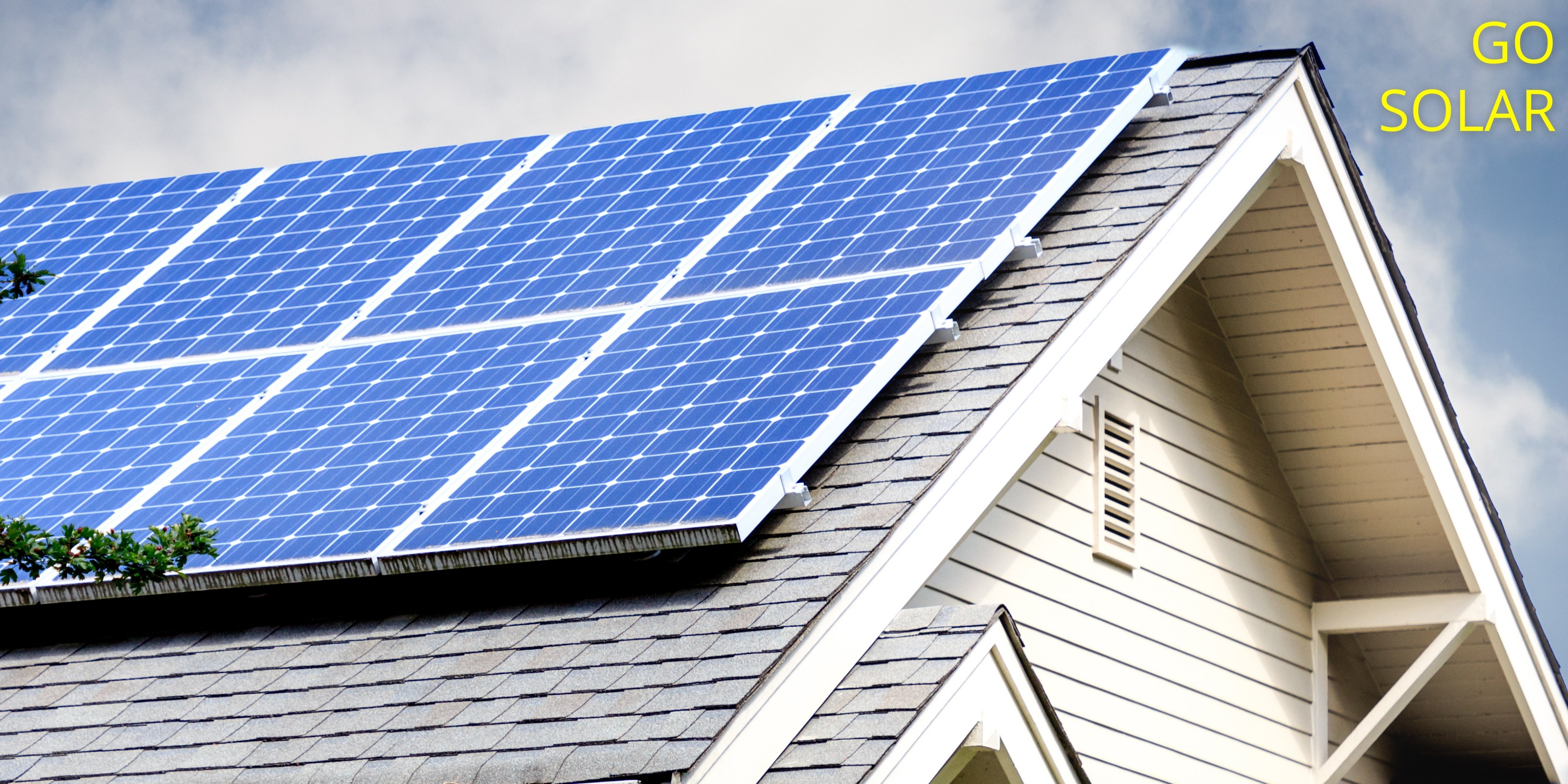
Now is an ideal time to explore solar
Summary: solar story article
When: Mar 04, 2023
Time:17:00 - 05:00
Description
by Nancy Fliesler
The Inflation Reduction Act passed in August includes a tax credit for solar systems of up to 30%. It starts right now and lasts through 2032, when it drops to 26 percent. An additional Massachusetts credit refunds 15 percent of the cost of your system or a maximum of $1,000.
With these incentives and electricity bills expected to go up dramatically (especially now with the war in Ukraine increasing gas demand), this is a golden moment to consider solar panels for your home. The electricity that solar systems produce feeds into the grid and would reduce your Eversource bill — your meter would run backward. If your system produces more electricity than you need, you can:
- add battery storage, also eligible for a 30% credit, to bank the power for whenever you need it.
- donate the extra to a charity or a friend or neighbor in eastern Massachusetts also served by Eversource
- sell the power back to Eversource and get a credit against the Supply portion of your bill (Eversource will eventually send you a check).
Now you may be wondering: Where do I start? Should I buy panels or lease them? What does it cost? Will the system eventually pay for itself? What if I can’t afford to pay up front or can’t get credit?
To tackle these questions, we consulted with Energize Framingham member Leo Boudreau, who has been selling solar energy systems since 2010 (currently with NuWatt Energy in New Hampshire). The good news is that there are options for virtually anyone who pays an electric bill, regardless of your pocketbook and how much sun you get.
Is my home a good candidate for solar?
Online tools like Google’s Project Sunroof may be able togive you a quick sense of how much direct sun your roof gets based on your address. Solar installers can visit and assess your home’s shading, orientation, the size and slope of your roof, and your roof’s condition. (By the way, if your roof is too shady, you can also install solar in your yard or as a carport in your driveway provided it complies with permitting and zoning regulations and meets the setback requirement for your location (typically 30 feet back from the road).
How much would a system cost?
Follow these steps:
- Check your Eversource bill. It will list your monthly electricity usage in kilowatt-hours (kWh) for each of the past 12 months.
- Add the monthly amounts to get your annual usage. Let's say the total for September 2021 to August 2022 is 7,389 kWh per year. Let’s round that up to 8,000 kWh.
- Your installer will then calculate the size of the system you need, based on your electricity usage and your home’s solar potential. Let’s say they suggest a 6-kilowatt (kW) system. That might take the form of 15 panels, each producing 400 watts of power (15 X 400 = 6,000 watts or 6 kW).
- Multiply the size of the system by the price per watt. Currently solar panels average $3.44 per watt in Massachusetts, according to Energy Sage. For a 6 kW system, you would multiply 6,000 watts x $3.44/watt, which yields $20,640. The exact amount depends on the manufacturer and the quality of the panels.
- Subtract the tax credits.
For example:
$ 20,640 system cost
- $6,192 30% Federal tax credit*
- $1,000 Massachusetts tax credit (most systems hit the $1,000 cap)
$13,448 Net cost to you
*Note: If you don’t owe this much in taxes, you can carry the unused credit over to the next tax year, for up to five years.
How much can I save with solar?
To calculate your potential savings, multiply your annual kWh usage by Eversource’s rate: the total of the Supplier charge and the various Delivery charges on your bill. At the 2021 rate of $0.233/kWh, a homeowner using 8,000 kWh/year of electricity would have spent a total of $1,864, averaging about $155 per month. But with the new rate of $0.32 per kWh, as of July 1, 2022, that increases to $2,576 per year or about $215 per month.
Those, roughly, would be your savings if your system meets 100% of your electricity needs. If your home doesn’t get enough sun to meet 100% of your needs, your savings would be based on your system’s actual production.
EnergySage estimates that on average, Massachusetts solar purchasers will break even on their investment in 8.65 years. You can recoup your costs faster if you purchase battery storage and/or have surplus power to sell back to Eversource.
Should I buy or lease?
Leasing avoids having to pay for the panels up front. If you lease, you would make monthly payments to the solar company installing the panels, alongside a reduced Eversource bill. There are also lease-to-own options.
If you buy, you will likely get a better deal. You can take full advantage of the tax credits, whether you pay in cash or take out a bank loan. (See below for more on financing.)
Should I purchase energy storage?
According to Energy Sage, battery storage systems can cost as much as $10,000 to $20,000 including installation fees, minus the 30% tax incentive. If you have an abundance of sunlight and can finance the purchase, it’s worth considering. You can draw on the battery during times when your solar panels aren’t producing (like at night or cloudy days), saving further on your electric bill, and you have a backup in the event of an Eversource outage.
Another benefit is that you can earn money by selling your stored electricity back to Eversource through Mass Save’s Connected Solutions program. When the grid needs more power during peak demand times, Eversource will tap in for up to 3 hours at a time and pay you an incentive (an average of $225 per kW in summer). More details on Eversource’s website.
I can’t pay upfront for a system, and I can’t get the tax credit because I don’t owe enough in taxes. Is there anything I can do?
Yes! Financing options are available, including very low interest loans (0.99% or even 0%). But watch for the fine print on these. If you finance through the solar company, there are dealer fees, as much as 25% added to the cost of the system. The company may also require you to surrender your tax refund to offset the cost of the system, or take a larger loan covering the system cost before the tax credit. As a result, you might end up paying more than the cost of your electric bill.
In general, it’s better to get the loan from a bank or other lending institution. This will allow you to keep your tax credit. If you can’t take all of the tax credit in the first year, you can carry it over to the next year.
For people who have trouble getting credit, a Providence, RI–based nonprofit called Capital Good Fund will make low-interest solar loans without looking at credit scores or debt versus income. They just need to see evidence you can pay your bills. Their loan origination fees are much lower than those typically offered by solar companies. You can keep your federal tax credit and spread the loan over 25 years.
Massachusetts also has a plan called the Solar Massachusetts Renewable Target program (SMART) that offers financial incentives to homeowners to produce more solar power than they need, and then donate some of their credits to low-income households.
Community solar
If you rent, get too little sun, or for other reasons can’t install solar on your own home, you can always sign up for community solar and purchase a share of solar electricity from a solar farm. You would sign up as a customer willing to purchase electricity (once the project is built), helping to finance more solar right here in Massachusetts. Or you can sign up with an existing project if it’s not fully subscribed. These programs have no upfront costs and typically provide a 10% discount on the Supply part of the Eversource bill, which equates to credits of about 5% to 7% off the total bill. The Massachusetts Clean Energy Center (CEC) has more information.
SunWealth, a clean energy investment firm, runs community solar projects that provide even greater savings for residents in income-eligible areas, about 20% off their electricity bills each month. More information on community solar from the Massachusetts Clean Energy Center.
- All Events